Case study / saas
TradeProof
The name on a bid is only the beginning of a license check. A project manager still has to match the business, the state, and the kind of work the license covers. I founded TradeProof and designed the search around that moment before a hiring decision.
- Role
- Founder & Developer
- Timeline
- 2025–present
- Year
- 2025
Start with the bid on the desk
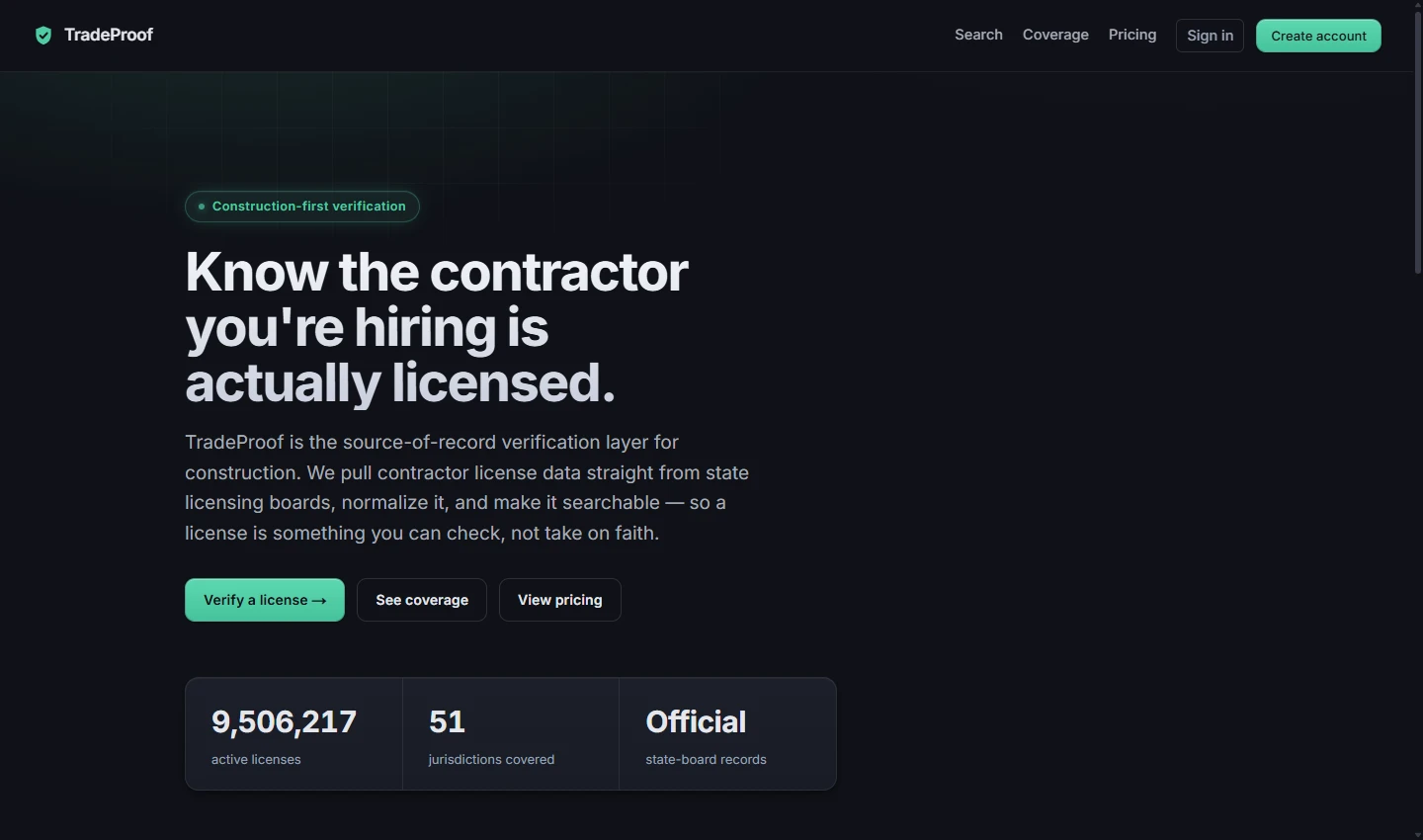
I worked backward from a bid with a business name on the cover and a state in the job address. Those became the two controls above the results. Behind that simple form, I brought records from separate licensing boards into a common structure so a visitor can read across jurisdictions without having to learn a different search screen for each one.
Make the source part of the brand
The opening headline speaks to someone about to hire a contractor. Directly below it, the site identifies the state licensing boards as its source and gives coverage its own link. Against the charcoal background, the mint-green button takes the visitor straight to a license search. The first way to judge the brand is to look up a familiar business.
Give the license number its own column
A business name may look familiar and still be the wrong match. In the results, the locality sits under the name. The state, license number, type, reported status, and expiration each have a consistent place across the row. I kept status and expiration side by side because they answer different questions. Opening a record reveals its source and issue details so the reader can examine the match more closely.
Show what a search can cover
An empty search is hard to interpret if the visitor cannot tell whether a state is represented. I built a public coverage page with counts by jurisdiction and a route back to search. On November 24, 2026, it listed 9,506,217 active records across 51 jurisdictions. A team can look up coverage for its own state before relying on a search result.
See coverage by jurisdictionTech stack
Next.js · Python · FastAPI · PostgreSQL · Google Cloud
More case studies
Sarah Beauty
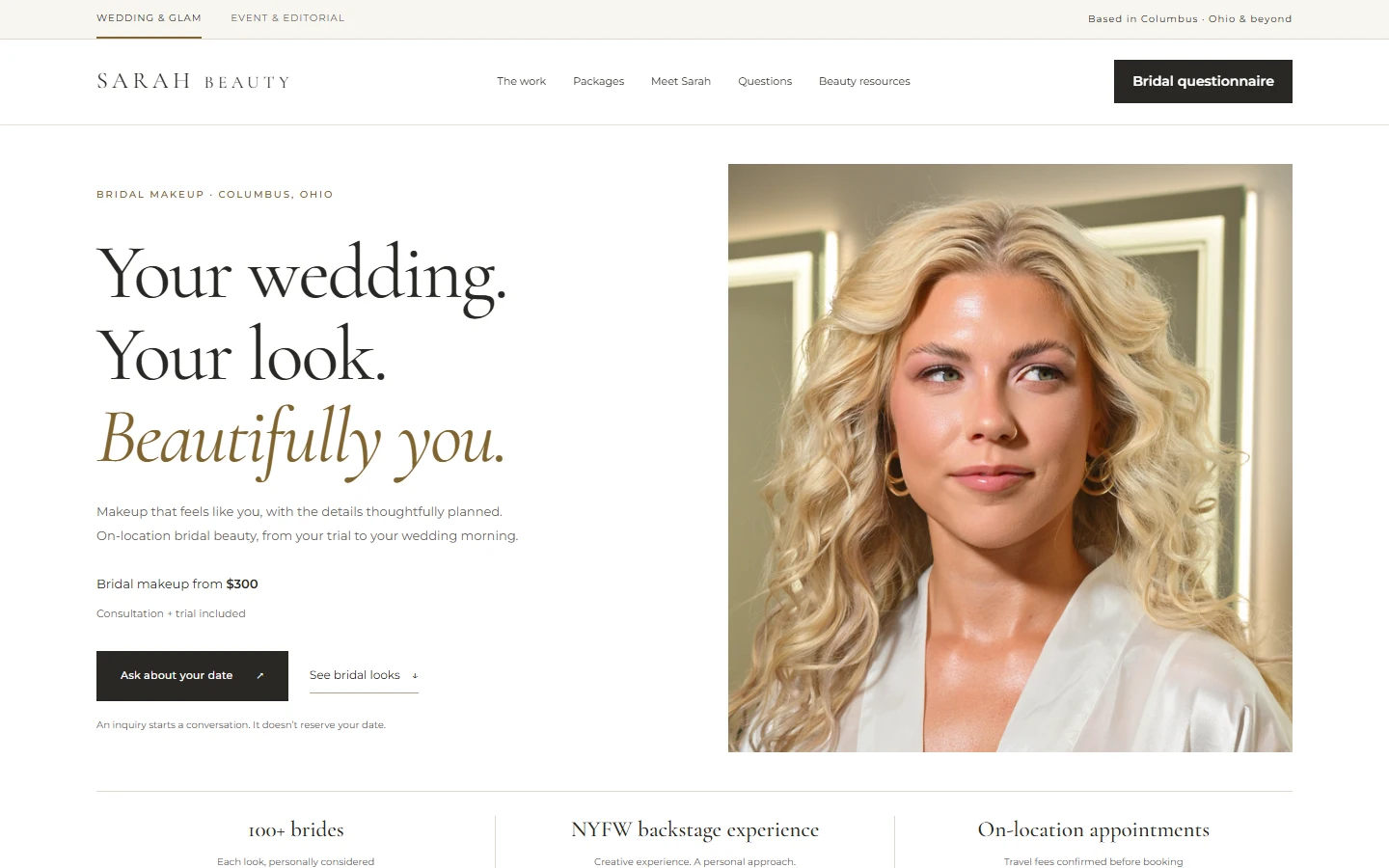
How Sarah’s portfolio became a place to plan a wedding morning or brief an editorial shoot.
Maison Saint Louis
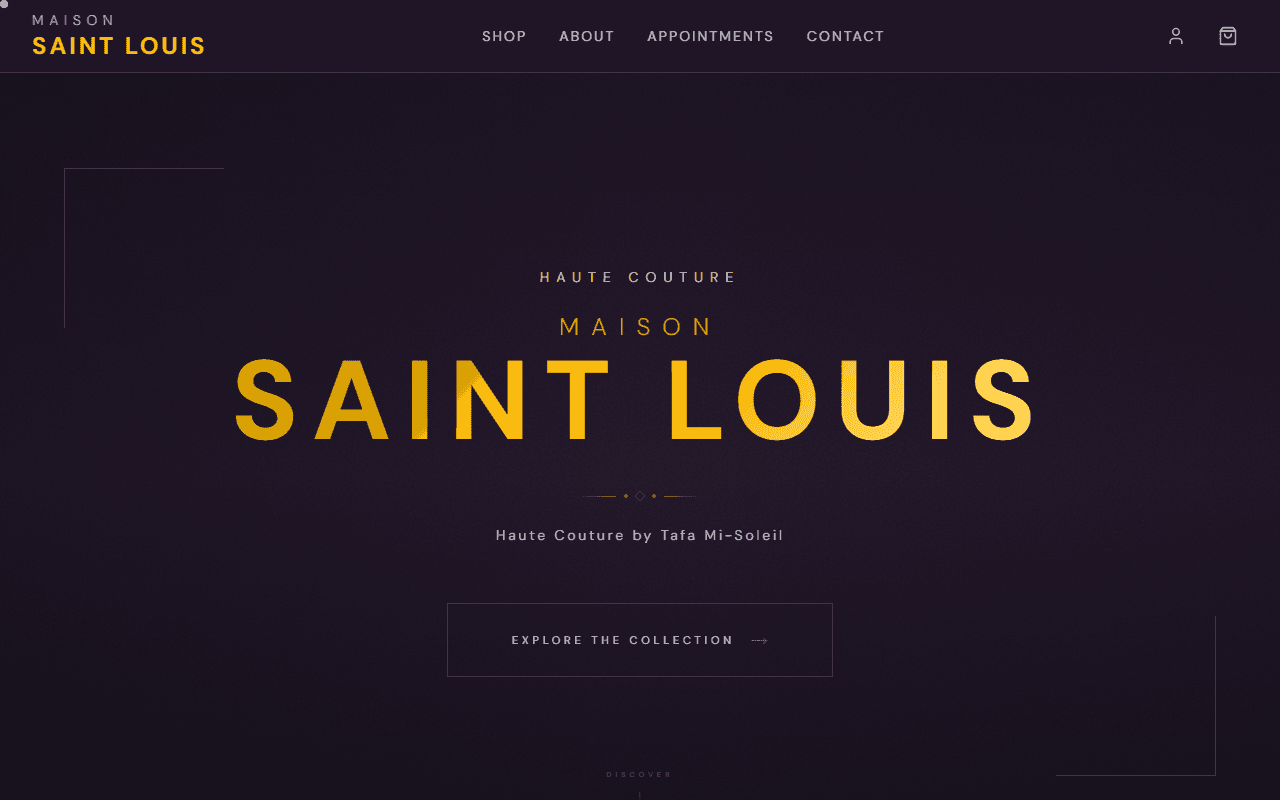
How the Maison Saint Louis storefront takes shoppers from Tafa Mi-Soleil’s collections to a purchase or a private consultation.
Core Bastion
Designing a Windows monitor that takes an IT technician from a slow machine to the process worth inspecting.