Case study / civic tech
Ayiti Sitwayen
A voter in Haiti might be looking for a centre in Delmas. A relative abroad might be trying to identify someone named in a news report. I founded Ayiti Sitwayen as an independent civic publication where both readers can start with their own question, in Haitian Creole or English.
- Role
- Founder & Developer
- Timeline
- Ongoing publication
- Year
- 2026
Begin with a place, a name, or a question
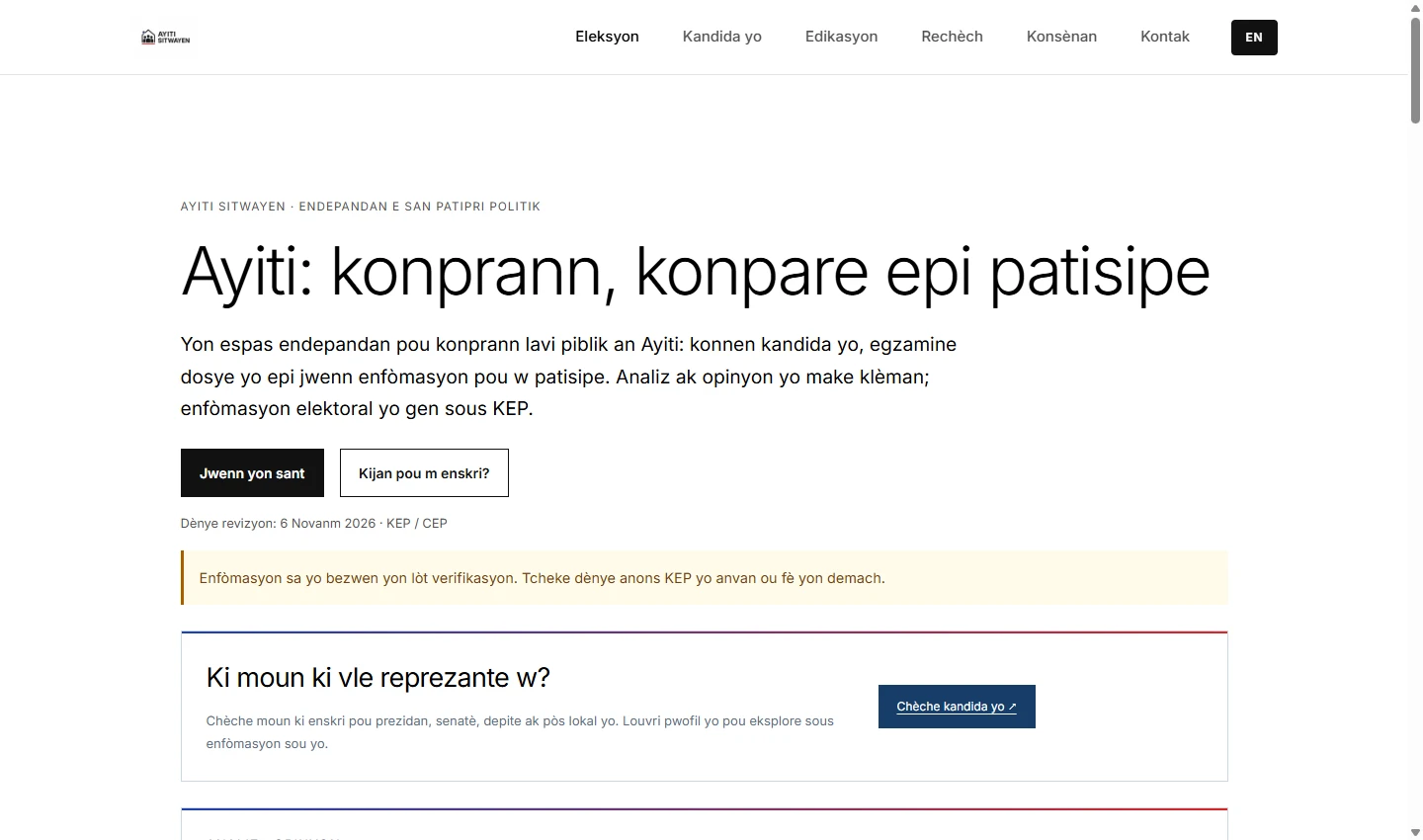
I organized the homepage around the reasons someone might open it on a phone. Finding a centre and learning how to register appear first. A separate panel asks “Ki moun ki vle reprezante w?” In English, “Who wants to represent you?” That question leads to candidate research. Analysis has its own label farther down the page. In the centre directory, a reader can narrow the list by department and commune. I put a note above the filters explaining that the directory gives an address. A voter needs confirmation from Haiti’s electoral council to know which centre they have been assigned.
Give a preliminary registration its own label
A portrait and a name can make any listing look official. I designed the candidate cards to carry the office, party, and registration status alongside the name. An initials tile appears when a photograph has yet to be verified. A reader can search by name, party, or place, open a profile, and examine the sources. The distinction between filing paperwork and receiving official validation stays visible throughout that search.
Explore the candidate directoryWrite for the way the guide is shared
I built Haitian Creole and English editions with matching ways into the guides. A reader can listen to the election guide in Kreyòl, follow the transcript, or send the guide to family through WhatsApp. That shaped the writing as well as the controls. A heading about registering to vote has to make sense to someone hearing it aloud and to someone opening a shared link halfway through the site.
Let readers see who is speaking
An election notice and an opinion article can mention the same person and carry very different weight. I placed the electoral council’s name and the review date beside practical guidance. Analysis carries its own label before the headline. Those small editorial choices give the publication its identity. Readers can tell when they are consulting a public source, when to check for an update, and when they are reading an interpretation.
Tech stack
HTML · CSS · JavaScript · Python · Vercel
More case studies
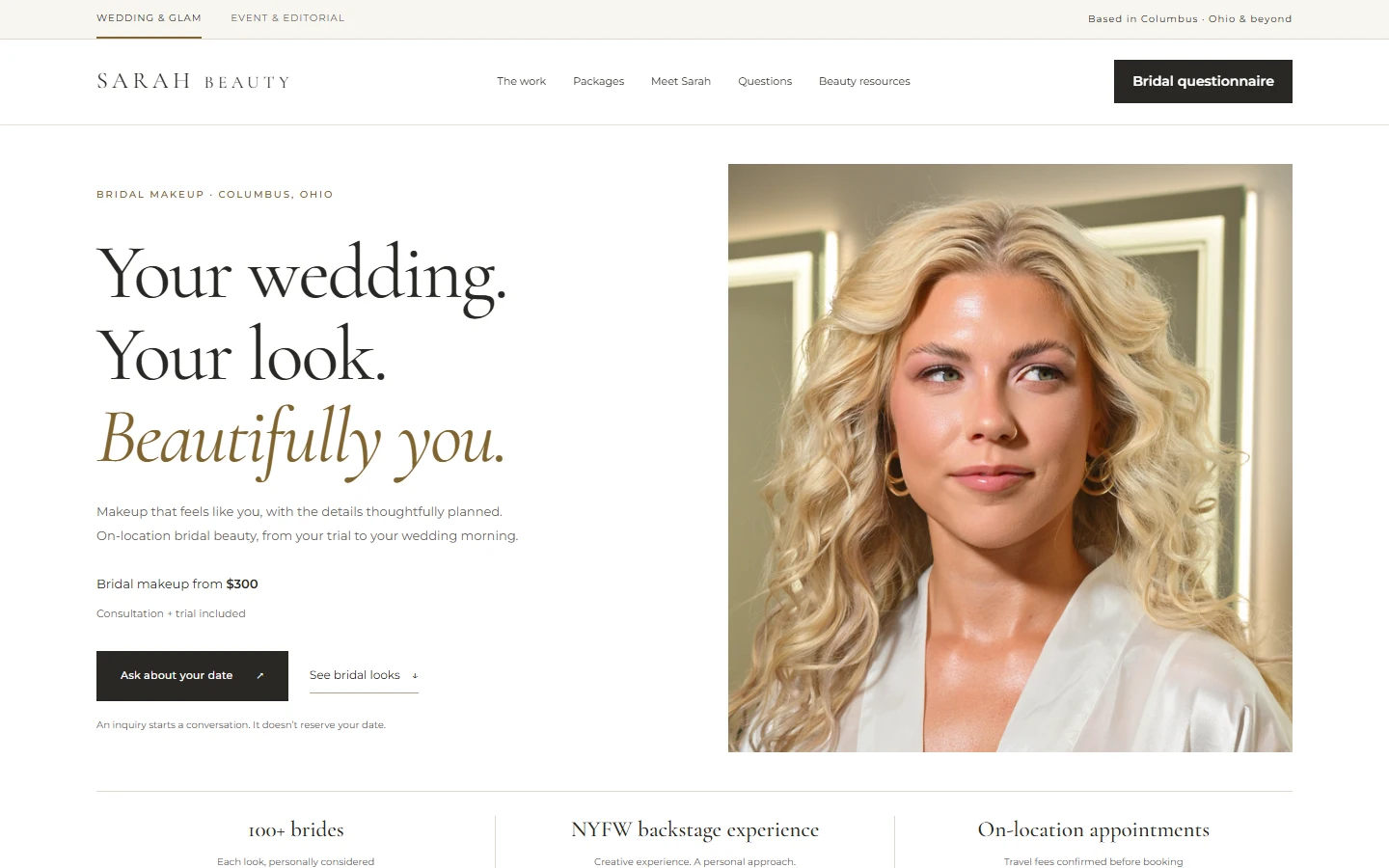
Sarah Beauty
How Sarah’s portfolio became a place to plan a wedding morning or brief an editorial shoot.
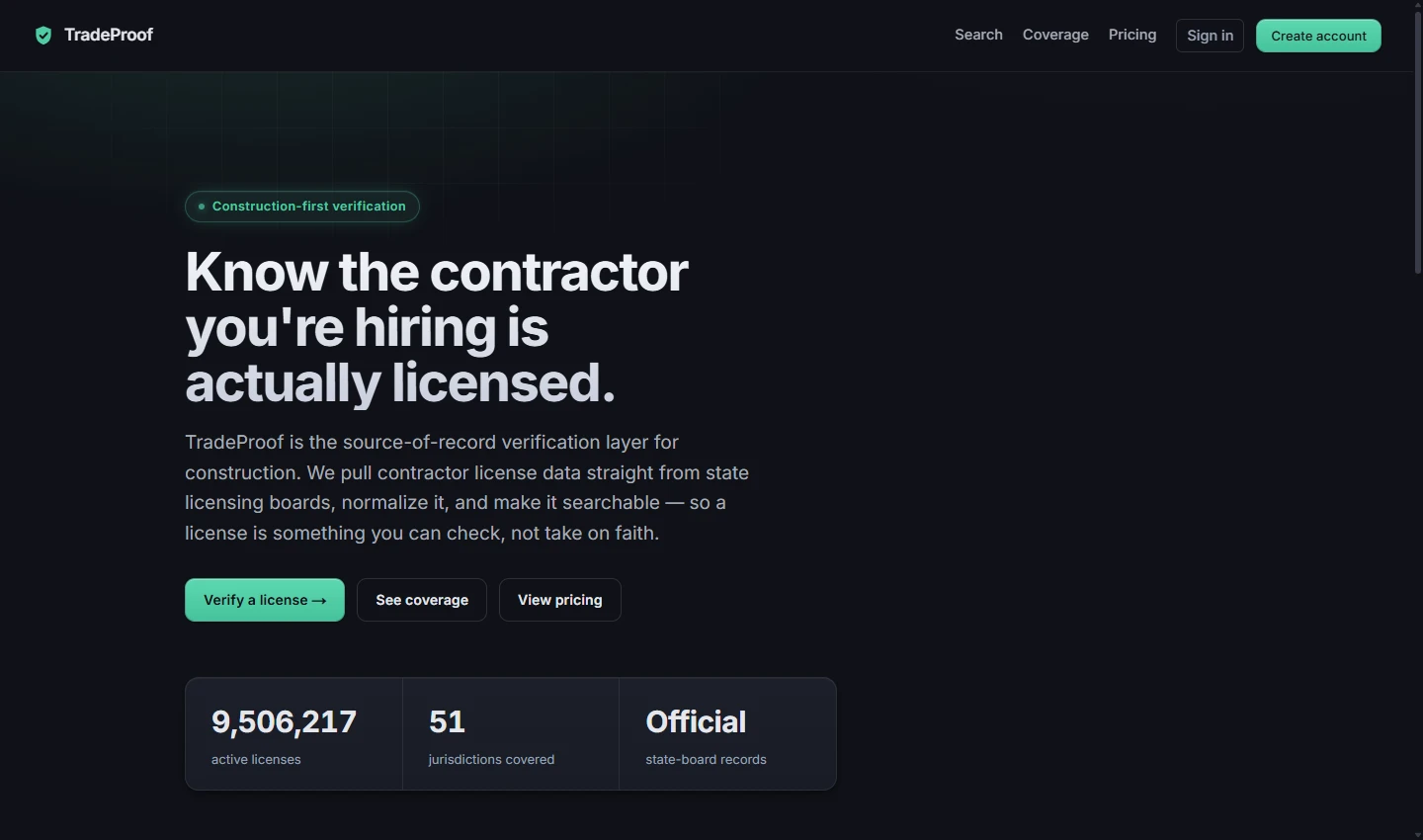
TradeProof
How a construction team can trace a contractor’s name on a bid to a state licensing record.
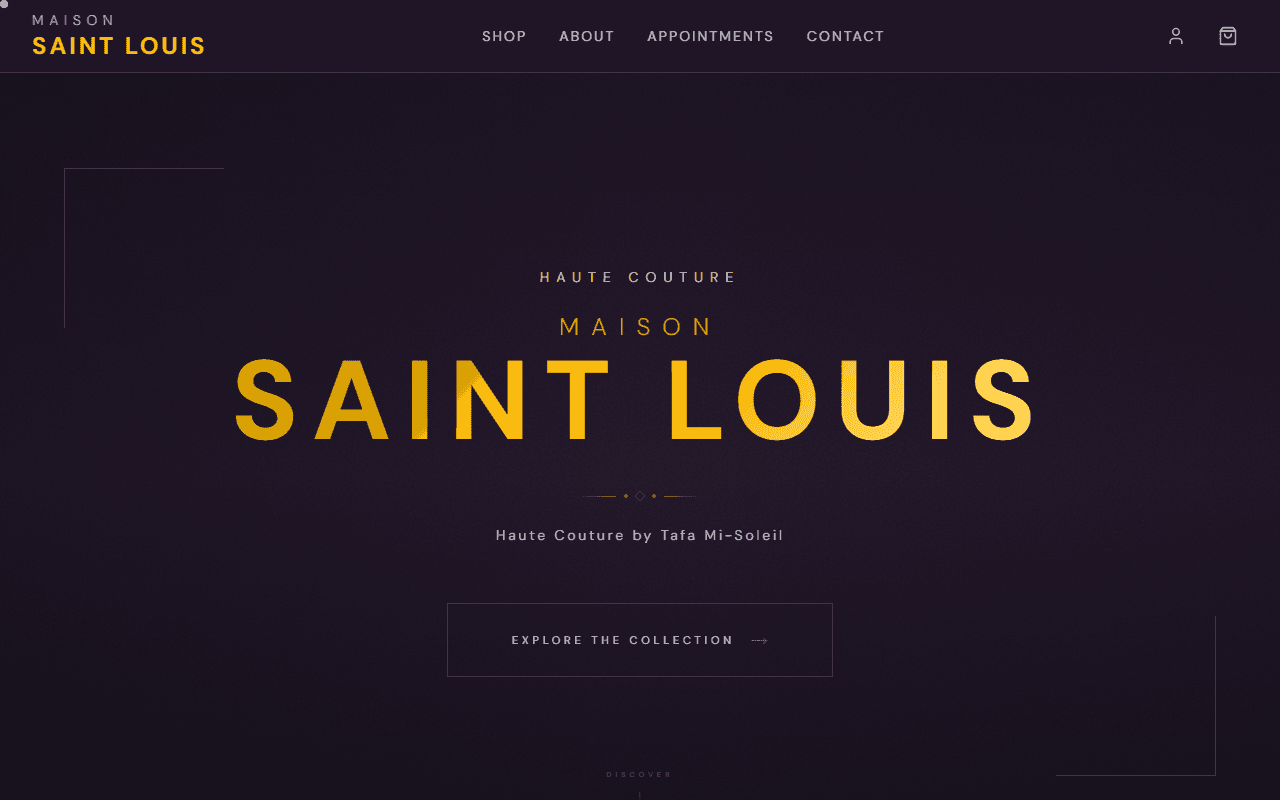
Maison Saint Louis
How the Maison Saint Louis storefront takes shoppers from Tafa Mi-Soleil’s collections to a purchase or a private consultation.